After a short and uneventful stint at the shop, I attended this months meeting of Untangling the Web. The two presentation I saw were, firstly, an overview of Ruby on Rails, by Oliver Legg.
Rails is a web framework for the Ruby programming language. Ruby became quite a hot language about ten years ago when Rails first came out. There were other frameworks, for other languages, but Ruby is incredibly flexible, and Rails very well thought out, so it became something of a hit. Things have cooled off somewhat during the last few years, and Rails has a few competing frameworks for Ruby, notably Sinatra, but it's still has it's adherents.
The second presentation was by Darren Mothersele regarding Drupal.
This was quite a comprehensive overview and very intriguing. I'd looked at Drupal a few years ago as a suitable Content Management System (a kind of web-site-in-a-box) but found it to be a little over-complicated for basic use. It's changed a bit since then, notably when the architecture was re-designed in such a way as to abstract and modularise the core components. The net effect of this is to create a meta-CMS, or a CMS building kit, through the use of Drupal Distributions. For example, there's a distribution to support new media businesses, OpenPublish. There are ones to support Open Government, NGO's, eCommerce and so on. Darren also covered new features in Drupal 8, to be released next year, which includes web services, multi-lingual support and responsive design (previously plug-in modules) in the core API.
The Untangle the Web presentations have been quite good so far, providing an overview to compliment the in-depth presentations at Skills Matter.
... about programming, growing up in the 1970's and 80's, games, science fiction, working in a charity book shop, films, spending too much time watching television, living in Basildon and Essex, and whatever else emerges from my fevered imagination. If you're reading this, it's your fault you clicked on the link: I am not responsible for your actions.
Tuesday, 30 July 2013
Sunday, 28 July 2013
The Dark Knight Rises
I got this DVD at Christmas but have only just got around to watching it. Bruce Wayne (Christian Bale), and the Batman, face their greatest challenge when Bane (Tom Hardy) attempts to take over Gotham City.
The idea seems to be to conclude the trilogy by re-writing the plot of the first film. Gotham, again, gets cut off and isolated, this time for months rather than just a single night. Even Bane is, at least initially, said to be a student of Ra's al Ghul, the villain in the first film. The effects are good enough, as is the acting, but there's something vaguely tired and re-cycled about the whole thing, as if everyone couldn't wait to get shot of it and move on to something new.
Friday, 26 July 2013
Thursday - Cambridge Folk Festival 2013
I went along to the Carbridge Folk Festival yesterday afternoon to get a little music. I had my usual drink of very refreshing lemonade (no mint in it this time!):
It seemed to be a bit of a singer/songwriter line up, but there were one or two bands. It started with....
The Brass Funkeys
What a great band! It was a bit like a New Orleans Jazz Band, but a bit more hyped up and playing anything that came to mind. This includes Seven Nation Army, by the White Stripes, and One Step Beyond, by Madness, as well as traditional songs like Fly Away. I've been playing around with the video settings on the camera, so this doesn't anywhere near do justice to them:
Their final song got everyone singing "Sweet dreams are made of this...".
Katheryn Roberts and Sean Lakeman
A husband and wife folk duo, they sang in a traditional folk style. Very nice, she's got a lovely voice and some very good songs.
Willy Mason
An American singer/songwriter, he's a bit too MOR for my taste, but the songs were well crafted.
Lucy Rose
The "name" act of the day, by the looks of it. Her songs were good, but I think she's too intimate a singer for a festival, especially late in the evening. The afternoon on Saturday would have been more appropriate.
Overall, I think they needed a band to really liven things up a bit. Bellowhead are on tonight, which seems to be about right, given their reputation.
Coda
As I was sat on the grass reading, this small group of young lads nearby were playing, one with a banjo and another with a guitar. The music was good, although their voices weren't strong enough, and they got a round of applause from those around them when they finished. It's that kind of festival.
Tuesday, 23 July 2013
Real World Comparison of Scala and Clojure
Tonight, I attended a presentation by Robert Rees (the podcast available here), from the Guardian Newspaper group, comparing his experiences with both Scala (which is being rapidly adopted by the Guardian, along with MongoDB, to replace their Java/Oracle technology base by the years' end) and it's functional competitor Clojure.
I'll just write a little bit of context for those who aren't too familiar with what all the fuss is about.
Usually, when you make a piece of software that runs on an operating system, such as, say, Windows or Android, you have two pieces of software, a compiler and a linker, that turn the code into an executable, which you can then run. Most pieces of software are done like this, from my noddy little exercises in C for college up to Microsoft's Office suite. About fifteen years ago, a group of programmers at Sun Microsystems, in the U.S., came up with the idea that you can separate the executable into two halves: the first bit would be the specific code to do a particular job and the second bit to be more general that would manage the communication between the specific bit and the operating system (the idea wasn't theirs, exactly, but the way they were going to use it was). This bit, or layer, was called a "virtual machine" and it could be re-written for any operating system in such a way that the specific program could be run on any virtual machine without having to be re-compiled, what Sun called "compile once, run anywhere". Thus the Java Language and the Java Virtual Machine (JVM) were created. The Java compiler produces something called "bytecode", a sort of half-way house between code and executable, that can be run by the JVM. In theory (although not an idea immediately taken up by Sun) any language, not just Java, can be turned into byte code by a suitable compiler to be run by the JVM. Unfortunately, Sun jealously guard the definition of byte code, which is the interface to the JVM and how it works, so that no-one can produce another language which runs on the JVM (and can compete with Java, and Sun), unless Sun say so. The same also goes for the JVM itself, thus the first JVM for Linux was made by Sun, not the open-source community.
Skip a few years and up come Microsoft. They've adopted the same idea a few years earlier for their Visual Basic language, but it's not particularly well done. They have a word with Sun about creating a version of Java for Windows. Sun say "ok, but we're watching you!!" (Microsoft being a large corporation with a somewhat mixed reputation, both technically and commercially). Microsoft create their own version of Java, called J++, and a virtual machine to match, but there's a few cross word from Sun (in the form of a legal suit) as they don't like what they see (surprise, surprise). In the fallout, Microsoft create .Net, which is their collective name for both the new Windows virtual machine, the code libraries that go with it, and a load of related (and, some might say, unrelated) technologies. The .Net "VM", called the Common Language Runtime (CLR), is so optimised for Windows, and so pervasive, that almost every executable on Windows now has to use it. Microsoft, like Sun before it, also produced a Java-like (and improved) language, C#, as well as adapting Visual Basic and Visual C++ for use with this new technology.
"OK", says you, "but what's this got to do with Scala and Clojure?". Well, one of the things that Microsoft did is open up the .Net interfaces and, in particular, the definition of the .Net byte code, called Common Intermediate Language (CIL). This means that anybody with sufficient skill can implement a .Net compatible language compiler. This didn't have much of an impact, at first, but in reaction, Sun decided to go one further and open-source most (but not all) of the JVM, an almost complete reversal of the previous policy. It's a bit baffling as to why, but Sun were having financial problems at the time and were subsequently taken over by Oracle, so it might have been something to do with that. Anyway, this openness means that, like .Net, people with sufficient skill can produce new languages for the JVM, and this is what Scala and Clojure are.
Both Languages implement functional programming, but Scala implements both functional programming ideas and object oriented ideas, like those in Java, C++, C# and Delphi. Clojure, on the other hand, is an implementation of Lisp, a mathematics-based language using something called Lambda calculus (invented by Alonzo Church and the basis for functional programming) and one of the oldest programming languages.
Robert's presentation, done in a friendly and relaxed style, took us through the two languages and compared their various features. Although he seemed to prefer Clojure, he admitted that it had some problems which might be difficult to overcome in an environment where Java, or a similar language such as C#, was established. In that case, Scala might be more easily adopted, despite it's more compromised implementation of functional programming.
However, he also highlighted the future release of Java 8, which is puported to have Lambda extensions, and might make adopting Scala or Clojure moot. Also interesting was his theory that if Microsoft implemented similar features in C#, F#, it's functional programming language, would similarly be redundant.
Sunday, 21 July 2013
Oz The Great and Powerful and Lemony Snicket's A Series of Unfortunate Events
I thought I'd place these together for contrast as they are both based on children's stories. First up, the prequel to The Wizard of Oz through my LoveFilm subscription. Oscar "Oz" Diggs (James Franco), a sideshow magician gets whisked by a tornado to a mysterious land.
A bit of personal history here: I was The Wizard of Oz! Many moons ago, I was in an amateur dramatics company and I played the title role when we did a production of the musical the original film was based on, so it was interesting to see a bit more of the story.
It's quite a good film, with very good special effects and fills in the background to the original story. The only quibble I have with it is that it seems to be a children's story with no children in it, so it becomes difficult for children to empathise with anyone, and it's not really a sophisticated enough story for adults. Franco's a better Oz than I was, though.
Next is the film adaption of the very successful Lemony Snicket books I got from the shop. The Baudelaire children, Violet, Klaus and Sunny, are orphaned and, passing through the hands of various guardians, try to find out what happened to their parents while avoiding the clutches of the lethal Count Olaf (Jim Carrey).
Your enjoyment of this film will depend on what you think of Jim Carrey's performance as the evil Count. I thought he wasn't villainous enough to counteract the hammyness of the role. However, the rest of the cast is good enough to compensate, and the plot is a good one, in particular how the children escape the Count's attempts to kill them.
Both films are enjoyable, by adults and children, although the second probably has the edge with all ages.
Friday, 19 July 2013
Silver Linings Playbook
I blogged about this last year and it came through my LoveFilm subscription. Pat (Bradley Cooper) moves back in with his parents while trying to put his life, and marriage, back together after a stay in a psychiatric hospital for bipolar disorder, when he meets Tiffany (Jennifer Lawrence).
A very good romantic comedy. The plot is a little contrived in places, but there is a useful side story with Pat's father's (Robert De Niro) superstitious gambling. The acting is top notch from the leads (Lawrence won an Oscar, but Cooper was good as well), with a lot of emotional engagement. Highly recommended.
Thursday, 18 July 2013
The Hunger Games
From my LoveFilm subscription, I watched this adaption of the very successful book by Suzanne Collins. In a dystopian future America, Katniss Everdeen (Jennifer Lawrence) volunteers to take part in the annual gladiatorial fight to the death in place of her younger sister.
This is a very good film. The future seems realistic enough, with the extreme divide between the very rich and technically advanced Capitol and very poor Districts, plus the death-match reality TV show used as a tool of political control. The acting is also up to the mark, with Donald Sutherland as the sinister President Snow and Woody Harrelson as Katniss's washed-up and cynical mentor, and you feel a fair amount of empathy with the lead characters.
It's a bit more thoughtful than the average pizza movie. Recommended.
Wednesday, 17 July 2013
Pacific Rim
Continuing the Summer of Cinema, I went to see the Guillermo del Toro Mecha-Monster movie:
To appreciate this film, you have to really be into the whole Japanese Mecha thing. Unfortunately, that doesn't include me, so I thought this was a bit overblown. It must have cost a small fortune in CGI, but outside the monster fights the film doesn't really exist, and neither does the acting. There are worse excuses for sitting in a dark, air-conditioned room for three hours on a hot, sweaty afternoon, but not many.
Oxfam Tuesday - Hot Day in a Hot Shop
Yes, folks, I did shift in the sweltering heat of the shop yesterday afternoon, especially so on the top deck where, for once, I was glad when it was over.
Dave has put out some collectable vinyl and one of them is The Byrds classic, Sweetheart of the Rodeo:
£30 to the discerning punter.
I also got to listen to the latest Uncut CD which has tunes by Field Report and this by Valerie June, which I quite liked:
Dave has put out some collectable vinyl and one of them is The Byrds classic, Sweetheart of the Rodeo:
£30 to the discerning punter.
I also got to listen to the latest Uncut CD which has tunes by Field Report and this by Valerie June, which I quite liked:
Tuesday, 16 July 2013
Android Live Code: Monetization and Augmented Reality
Last night I attended the first Android Live Code seminar at Hub Westminster, based in New Zealand House just off Trafalgar Square (very swanky!).
The first presentation was on the best plans for the monetization of Android applications given by Yinon Horwitz from StartApp.
He gave a very slick presentation (which subtly plugged his company's services), about the different ways in which Android Apps can be made to generate revenue. Mostly this consisted of either paying up front for an application; the "freemium" model, where you get a basic app for free and then pay to get various functionality enabled; and various ad-based options.
The second talk was by Lukasz Piliszczuk who went through the source code of his augmented reality application, especially regarding image recognition.
While this was informative, it could have done with a few more diagrams to illustrate how the code fitted together, especially given his very stong accent.
Sunday, 14 July 2013
End of Watch
I received this cop film as part of my LoveFilm subscription about a week or so ago, but have only now got around to watching it. Two L.A.P.D. patrolmen (Jake Gyllenhaal and Michael Peña, who was in The Shooter with Mark Wahlberg) videotape their everyday lives while getting more involved in combatting a Mexican drugs cartel.
Probably one of the most powerful films I've seen this year and certainly the best of it's type I've seen for a while. The acting is superb, with Gyllenhaal and Peña looking like they've known each other for years. I thought that the video-taping was a bit gimicky at first, but it does give a certain intimacy which compliments the rest of the film: you do feel like you're on patrol with them. It's a great film with a lot of emotional engagement and highly recommended.
Friday, 12 July 2013
Don McCullin
My uncle pointed me in the direction of an episode of the BBC arts programme Imagine about the photographer Don McCullin, which is still available on iPlayer. When I'd taken him to The Imperial War Museum of The North in Salford Quays there was an exhibition of McCullin's work that impressed us both.
He was, as he admits, something of a "war junkie", covering Biafra, Vietnam, Beirut and The Congo. In Cambodia, fate finally caught up with him and he was wounded in an ambush, his camera taking damage:
He's also take some great photo's of everyday life in Britain, capturing the strange and eccentric, as well as the pitiful:
I highly recommend the episode and any exhibitions you might be able to see. You won't be disappointed, but they are very emotional.
Jack Reacher
From my LoveFilm subscription, this is an adaption of the book One Shot by the British author, Lee Child. Ex-military policeman Jack Reacher (Tom Cruise) is asked to investigate the shooting of five people by a sniper he once investigated of a similar crime.
A fairly run-of-the-mill action thriller with some good martial arts and such a good car chase (not in a Ford Focus) the film could well have been justified in being called Drive. Cruise is hardly stretched (he did his own stunts, though) and Robert Duvall looks happy with the money. What Werner Herzog is doing in the film is a bit baffling, although he does look like the man who threatened to kill Klaus Kinski.
Taken all around, not a bad little pizza movie but not exactly taxing either.
Thursday, 11 July 2013
Reading Matters
I've been reading a fair bit over the last few months, not all Warhammer 40,000, mostly finishing off stuff I've been reading throughout the year.
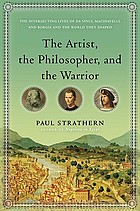
The Artist, The Philosopher and the Warrior by Paul Strathern
No, not one of those Californian new age self-help type books, but a history of the Italian Renaissance.
During the Autumn of 1503, Leonardo da Vinci and Niccolo Machiavelli were assigned by the Florentine government to follow Cesare Borgia (the Pope's illegitimate son) as part of his army, da Vinci to be his chief engineer and Machiavelli as a representative/spy. The story is a potted history of the three men, up to the time they were involved, what happened in those months and afterwards. In particular, the affect Borgia had on the thinking of the other two, especially his role in formulating Machiavelli's book, The Prince.
The book is a good read and fills in a lot of the background to The Borgias TV series.
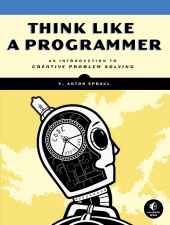
Think Like a Programmer by V. Anton Spraul
Yeah, yeah, what am I doing reading this. It's a book on the philosophy of programming, which is to solve problems using software, and very good: worth a read even for the experienced programmer. There is a very good chapter on recursion, some of which is available here. It's the kind of book which takes you further than just the basic "Ruby in 17 afternoons"-type book, but doesn't get too academic like some algorithms books.
House of Suns by Alastair Reynolds
One of his non-Revelation Space novels, this is about a clone-family six million years in the future who have been almost wiped out and their investigation as to who's behind it.
I've read one or two of his novels by now and this one's not bad. Reynolds does seem to be a bit long winded, though, and you feel at the end like saying "Oh, is that all it was?", although it is quite imaginative, and it is well written, like all his books.
Shady Illuminations in the PragPub Magazine
I've been going through some back issues of this reading all the articles written by John Shade. He's quite a good writer, although a bit erratic, and his article on Steve Jobs (when he left Apple for the last time) was insightful, as was his latest one on comparing K&R's "The C Programming Language" with with Stroustrup’s "The C++ Programming Language" (the latter being 1000 pages longer than the former):
Wednesday, 10 July 2013
A Day at the Museum
As part of my trip up North, I took my Uncle to visit the Royal Armouries Museum in Leeds, which are in a modern development next to the canal at Clarence Dock.
It's similar to the one at the Tower of London, but with a lot more room and specially designed to accomodate a huge collection.
As well as lots of weapons and suits of armour, there are some amazingly realistic dioramas:
This is one of The Battle of Pavia in 1525 when Spanish/Imperial forces defeated the French for control of the Italian peninsula. Another was of a tiger shoot:
It is the huge collection of arms that dominates, however, this being a set of double-barrelled flintlock pistols:
Overall, I think we found it a little overwhelming, especially with the heatwave we're currently experiencing. We also couldn't find a watering hole afterwards, which was unusual, so we headed back after a few hours.
Saturday, 6 July 2013
Django Unchained
As part of my LoveFilm subscription, I watched the latest Tarantino foray into B Movie genre remakes. Django is freed from slavery by a bounty hunter who teaches him the tricks of the trade.
A bit of background for those who don't know. The Django films were mass-produced spaghetti westerns back in the 60's & 70's, usually starring Franco Nero. They were incredibly bloody, violent films and not particularly good: the first one was ok, but the following ones went downhill very quickly. You can see from the description that they're ripe for remake by young Quentin and his associates.
In order to be able to view the film dispassionately, you have to suspend your moral judgment as much as possible and concentrate on the quality of the work itself. The acting is very good, in particular DiCaprio, playing against type as the evil plantation owner, and Jackson as his scheming butler, but it's Christoph Waltz as the German bounty hunter who steals the show. Jamie Foxx does his best, but looks outclassed by the talent around him.
On the minus side, as I've said before, there's a reason they're B movies. As for the violence, Pekinpah did it with much more style: compare this to The Wild Bunch and you'll see what I mean.
Friday, 5 July 2013
Oxfam Friday - Penguin Special
I thought I'd pull a last shift at the shop before I left for my holiday in the North. John had a wartime Penguin Special for me, which was most welcome:
S54, Unser Kampf, by Sir Richard Acland, who was a founder member of CND.
Thursday, 4 July 2013
The Sweeney - "You're Nicked!"
Part of my LoveFilm subscription, this is a remake of the 70's cop show. Jack Regan (Ray Winstone) and George Carter (Ben Drew) investigate the robbery of a jewellers where an innocent bystander was killed.
Hmmmm, not sure. I don't think it would be a particularly good cop drama were it not for the connection with the TV series. Ray Winstone's ok (he's no John Thaw, but you'd make allowances for that), but Ben Drew was a bit wooden for my liking. There's some good set-pieces, especially one in an underground car park but, overall, it just seemed like thugs chasing other thugs. Compare this to a similar film, Michael Mann's Heat, with Al Pacino and Robert De Niro, which had two class players and a good plot. Maybe American's do this kind of thing better (more money, probably), but it says something about us when the final car-chase involves a Ford Focus in a caravan park.
Tuesday, 2 July 2013
Despicable Me 2 - The Minions (and Gru) Return!
Taking advantage of Cheap Tuesday, I went to see the latest Despicable Me. Gru, having a difficult time adjusting to non-villainy, is recruited by the Anti-Villain League after a mutating serum is stolen by a mysterious super-villain.
Absolutely hillarious. Steve Carell is back as Gru, ably supported by Russell Brand, as Dr. Nefario, and Miranda Cosgrove, Dana Gaier, Elsie Fisher as his three wards, with Kristen Wiig as the new love interest (I can see women everywhere trying to buy a lipstick taser).
It's the minions who steal the show, however, as you'd expect, starting with a 21 fart gun salute and ending the film with funniest rendition of Y.M.C.A. I have ever heard. Go and see it: you won't regret it.
Saturday, 29 June 2013
Electro-magnetic Induction
Via Boing-Boing, I found this rather cool way of explaining electro-magnetic induction (the way electric motors work) using high temperature super-conductors and a moebius strip of magnets.
Nikola Tesla and Eric Laithwaite would be proud!
Friday, 28 June 2013
Butterflies in London
Every year for the past few years, during the summer, The Natural History Museum hosts a live butterfly exhibition in a special marquee outside. Called Sensational Butterflies, you can see them hatching and flying about. It's a great opportunity to take some photographs, which I did.
I also managed to get a shot of one hatching out in the special frame they've made for the purpose:
They can be quite tame and one was even perched on a girl's hand:
If you are thinking of going with a camera, be careful of the humidity fogging up the lens as mine did initially. It might be worth waiting until the lens is clear before shooting.
I did quite a trek through London by the end of the day, so I was glad to get back to BasVegas:
View Larger Map
Looper
Continuing the Summer of Cinema, I got this through my LoveFilm subscription. In a dystopian future, an assassin (Joseph Gordon-Levitt), or Looper of the title, finds himself in trouble with his employers when his future self (Bruce Willis) outwits him.
Not a bad movie, if a little over long for my taste. Gordon-Levitt spends most of the movie hanging around a farm looking at a loss for something to do, while Bruce Willis does his thing and shoots up the rest of the cast. One particular pleasure, though, is Gordon-Levitt's impression of Bruce Willis. Given Willis's limited range, I couldn't see them doing it the other way around.
The problem with the plot is that it exhibits a twist on the Grandfather paradox, which states that time travel does not work because if it does, you could go back in time and kill your own Grandfather before your father was born, thus preventing your birth and preventing you going back in time and killing your own Grandfather. In Looper, you can't forsee the future in such a way that you can change it and thus prevent yourself seeing the future.
Sorry. Just got a bit carried away there. You enjoy the movie and don't try to get your head around all the time-travel stuff. Otherwise, you'll end up trying to figure out Primer.
Thursday, 27 June 2013
New Lego - Commander Decorated
I got some new lego minifigs from series 10 today:
The rings on the sailor's sleeve indicate he's a Commander in the RN: four rings is a Captain.
I also got another Penguin Special from John at the shop the other day:
S209 from 1962, just as the Wall went up and the Cuban Missile Crisis was looming. It's weird to think that an entire generation has no recollection of the Cold War.
Faster
Whatever it is, just Faster! My LoveFilm Instant is a bit wonkey at the moment, but I managed to watch this through it. A former getaway driver (Dwayne Johnson) is released from jail and seeks revenge on the men who killed his brother and tried to kill him.
It's not a bad revenge film with a really good twist at the end that I didn't see coming and two decent car chases, enough to be called Drive. There are one or two problems with it though. The first is good ol' Dwayne, who can't really act that well. He tries his best, poor love, but he's up against Billy Bob Thornton, who seems baffled as to why he's in the same movie. Second was the assassin going through a existentialist crisis, which was just silly and distracting. Overall, everyone seems just a little weary, but maybe a better director would have made something superior, perhaps the Coen brothers?
Wednesday, 26 June 2013
Debugging In Python
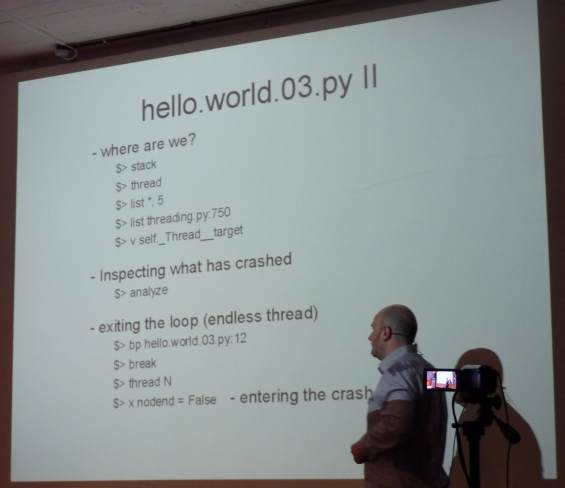
After an afternoon shift in the shop on Monday, I went into town to see Antonio Cavallo's presentation on debugging tools for Python.
He took us through four different examples and the different techniques used to debug them, in particular the use of the remote debugger, rpdb, to debug multi-threaded python applications, and gdb to debug calls to external C libraries. The latter was interesting because it revealed that the Python interpreter is written in C!.
Tuesday, 25 June 2013
Abraham Lincoln: Vampire Hunter - "Kiss My Axe"
Another from my LoveFilm subscription, Abraham Lincoln (Benjamin Walker) reflects on his secret life in the midst of a bloody civil war.
Yeah, I enjoyed it. Yes, it's silly, but the acting is more than reasonable, with Rufus Sewell and Dominic Cooper adding a touch of class as Lincoln's nemesis and mentor respectively, and it makes a good "what-if" along the lines of Kim Newman's Anno Dracula books. The action scenes are well done, as are the martial arts, and it's not a bad pizza movie. If you want serious, go and watch Daniel Day-Lewis overact: it's not half as much fun!
Oh, the Slaine reference? Yeah, Slaine McRoth's 30 this year and Pat Mills has written "Book of Scars" as a kind of anniversary:
There's an interview with him here. It's a big axe!
Sunday, 23 June 2013
Law Abiding Citizen
Another film through my subscription. Ten years after his wife and daughter are murdered in a home invasion, Clyde Shelton (Gerard Butler) returns to exact revenge on the killers and the corrupt and compromised judicial system that short-changed him.
Not a bad pizza movie, if a little grisly at times. Butler gives it his all, portraying a man turned into a monster, but Jamie Foxx looks like he was sleepwalking through the film. Ultimately, though, the film seems to lack anyone to empathise with. Who are the bad guys really? Is this just about revenge or is there a higher principal involved? And, if so, what?
Saturday - 2045: Conscious avatars or wishful thinking?
Today I went to see a review of the Global Futures 2045, an international conference in New York's Lincoln Centre, hosted by the London Futurists.
David Wood, who normally MC's the meetings, gave the presentation, up on the fifth floor of Birbeck College. The conference was set up by a Russian millionaire, Dmitry Itskov, and seemed to be mostly about the advances in cybernetics which seems to be in line with the sponsors aims. He's proposed the idea of moving our minds into Avatars (like the movie) in a five step programme over the next thirty years or so.
It was also a state-of-the-art conference as well, with a heavy emphasis on neuroscience and prosthetics, including a video of a Cambridgeshire man, Nigel Ackland, who lost his right hand and part of the arm in an accident and had it replaced with an advanced prosthesis:
The presentation was well done by David, but, as was pointed out in the Q&A afterwards, his emphasis was on the technological, the "hard" science, rather than the spiritual or psychological, the "soft" science. Also, two of the things missing, which were purported to be amongst the aims of the conference, were future society and culture.
Friday, 21 June 2013
Oxfam Thursday - Blagging, Nails and a Bit of Naughtiness!
I'm doing quite a few shifts in the shop at the moment, at least twice a week, and mostly downstairs, so hardly worth a mention. Yesterday, however, we had a chap come in with a donation, but there was a twist:
Customer (Geezer): "If I give you these books, can you let me have one in exchange?"
Me: "'Fraid not, mate. That's not how it works."
Geezer: "You sure?"
Me: "Positive. Take my word for it."
He was a bit disgruntled, but donated the books anyway.
John and Michelle were in. Michelle had some new nails, with little butterflies printed on them, which I commented on. John showed me some books which were quite rare and one of these was from The Olympia Press:
Formerly, certain books were banned from being published in the U.K., the Marquis de Sade's, Henry Miller's, etc. To get them, you had to go to France and The Olympia Press published them in English. The dust jackets were reversable and were white on the other side with no markings, so you could get them through customs without them being noticed.
I finished early and went to a seminar in London, at Skills Matter, called The Rise and Fall of Mutable State, given by Malcom Sparks. It was a short talk about one of the features of functional programming languages and a little on the history of programming (everyone's heard of Turing by now, but who's heard of Alonzo Church?). There was a lengthy Q&A afterwards, with lots of talk about Clojure and an extension for Java called Guava. I'm surprised no-one mentioned Java 8, which is purported to have more functional support.
Wednesday, 19 June 2013
Man of Steel - "Welcome to the Planet"
More Summer of Cinema with the Superman reboot in 3D. Clarke Kent faces his ultimate challenge when his Kryptonian past catches up with him and the people of Earth.
Absolutely fantastic. I enjoyed every minute, although it was a bit exhausting. Henry Cavill was good as Superman (he's a big, chunky lad!), coming to terms with his destiny, Amy Adams as Lois Lane was as cute and sparky as you'd expect, but it was Russell Crowe as Jor El and Kevin Costner as Jonathan Kent that gave the film it's class acting, Crowe especially relishing the role. Michael Shannon's Zod was also notable, making the character less of a meglomaniac than Terence Stamp's version and more someone driven to save his people whatever the cost.
However, it was the Giger envisioning of Krypton was what made it special for me: it was a suprise and felt absolutely right, giving Krypton an organic, metalic, insectoid, alien look, working especally well in 3D.
Highly recommended: go and see it and be as gobsmacked as I was!
Tuesday, 18 June 2013
Mission Impossible 4 - Ghost Protocol
Continuing the Summer of Cinema, via my LoveFilm subscription, I watched the latest IMF offering. Ethan Hunt and his IMF team, implicated in bombing the Kremlin, chase after the culprits to prevent nuclear war between Russia and America.
A superior pizza movie, and exciting enough, although Simon Pegg doesn't look the part (he does get to shoot somebody, though) and his humour grates a little, making the film feel like a kind of "Carry On Mission Impossible" at times.
The set pieces are great including Tom Cruise hanging off the worlds tallest building, breaking into The Kremlin (using a sort of portable Ames room: very clever) and a chase in a car storage building in Mumbai. The supporting cast is good as well, including Jeremy Renner and Paula Patton. Michael Nyqvist isn't bad as the villain, but it required someone to chew the scenery a little more, and Léa Seydoux, as an assassin for hire, was grossly underused. Recommended, however.
Sunday, 16 June 2013
Sunday Games Club - Sheepie Sleepy and Louis' Cards
Back at the Jugged Hare for another Playtest meeting. First was a game from a professional games company, Andrew Sage, called Sheepie Sleepy.
The product manager for the game, Jazz (a woman), was there to field test it. It's quite a nice little game, charming, with little sheep on the dice. The idea is that you try to get a good night's sleep by counting sheep, but there are things to keep you awake, such as coffee and other people snoring. I liked it.
Next was Louis' Cards:
A sort of multi-rule card game (same cards but different rules depending on what kind of game you play). Coraline's a graphic arts student and she was testing her design. The memory game was the best for me, but the other two, a counting game and a reaction-style game, were more popular with the others. The design intrigued one of the players, Andrew, who showed us some of the ones he's had made by a print firm over in the States called Printer Studio. Very professionally done.
Saturday, 15 June 2013
The Bourne Legacy - Thriller in Manila
Another from my LoveFilm subscription, in the wake of the exposure of the CIA assassin programs Treadstone and Blackbriar through Jason Bourne, another program is being shut down...
A sort-of remake of the original movie, with Jeremy Renner as the genetically enhanced assassin and Rachel Weisz as the doctor caught up in the fallout. It's got some really good action sequences, and such a good car/motorbike chase it ought to have been called Drive. The supporting cast is good, lead by Edward Norton, but despite being a reasonable pizza movie, there's always a comparison with the original, so much so that there are references to events from the Bourne Ultimatum going on in the background. It's as if to say, "you're watching this, but there's a much better movie going on over there."
Friday, 14 June 2013
Everybody Get Their Hands in the Air. This is a Mashup!
(Sorry about that).
I read a book, recommended via Boing Boing, a while back called "Creative License: The Law and Culture of Digital Sampling" by Kembrew McLeod and Peter DiCola.
It was a bit long winded, but the gist of the book is that, essentially, it's become almost impossible to use sampling as a way of creating music commercially without breaking copyright in some way shape or form. An example given was that "Paul's Boutique", a Bestie Boys album, has so many samples in it that, because of restrictions in copyright law, it would now cost far too much to make. So artists have three options:
I don't pretend that mashups are particularly creative or have much artistic merit, although it does take a lot of skill to make them, but they are fun.
I read a book, recommended via Boing Boing, a while back called "Creative License: The Law and Culture of Digital Sampling" by Kembrew McLeod and Peter DiCola.
It was a bit long winded, but the gist of the book is that, essentially, it's become almost impossible to use sampling as a way of creating music commercially without breaking copyright in some way shape or form. An example given was that "Paul's Boutique", a Bestie Boys album, has so many samples in it that, because of restrictions in copyright law, it would now cost far too much to make. So artists have three options:
- Make the music and wear a pair of brown trousers, hoping that you, your lawyers, the sampled artists lawyers and whoever else is interested can come to some agreement;
- Restrict the music to only a few samples and pay the fee for those;
- Make it for free. This way, although you don't make any money (and might be able to avoid paying for the copyright, under fair use), you can increase your reputation and get some practice at the same time.
I don't pretend that mashups are particularly creative or have much artistic merit, although it does take a lot of skill to make them, but they are fun.
New Lego - First of the Mohicans
I got some new Lego Minifigs the other day:
There's been a study going round from some University in New Zealand saying that the faces of the figures are getting angrier. The Mohican doesn't look exactly happy.
Thursday, 13 June 2013
Total Recall
This is the remake of the 1990 Arnie film through my LoveFilm subscription. In a world devastated by chemical warfare, Doug Quaid finds his life torn apart when he goes to Rekall to have new memories implanted.
Despite the fantastic special effects (lots of car chases through the sky and an amazing shootout in a labyrinthine lift shaft), and the hints at Bladerunner, I don't think it compares too well to the original movie. Mainly this is because the supporting actors in the original were so strong: Beckinsdale is no Sharon Stone, and the Michael Ironside character isn't there to chew the scenery. Bryan Cranston is good as the villain, but Bill Nighy looks as if he's just got out of bed (and why does he have an American accent if it's supposed to be Britain?). There doesn't seem to be any real energy in the film, which is a shame.
The Eagle (of the Ninth (Legion))
When I was a kid, there was a book by Rosemary Suttcliffe called "The Eagle of the Ninth", about a Roman centurion who went into the wilds north of Hadrian's wall to determine the fate of his father's legion and retrieve it's Eagle. It was made into a film a while ago and I saw it in the shop the other day and bought it:
It's not a bad film, if a little slow in places, and not as grizzly as Centurion nor as silly as King Arthur or The Last Legion. A decent pizza movie, even if you've not read the book.
Wednesday, 12 June 2013
The Expendables 2
I'm afraid so. The Expandables are back. Think of it as me performing a public service: I watch it so you don't have to.
How bad is it? Chuck Norris tells jokes; Jeanclaudevandamme tries desperately to be really mean, and not to laugh at the same time; Bruce Willis and Arnold try to out-badly-act each other and get beaten by Sly; everyone looks either embarrassed or bored (Jet Li was so embarrassed, he left after ten minutes). Unlike the last movie, even being teeth-grindingly awful can't save it, and it didn't work then.
I'm not saying "Don't watch it", but if you do, I did warn you.
Oxfam Tuesday - Motown and U2
I did a second shift upstairs at the shop this afternoon. I saw Lee on the way out and had a bit of a chinwag about the music. A young lady was looking for a present for her father the other day and didn't know what was appropriate other than "old school". When she looked over at a stack of records she said "Oh, Stevie Wonder! I've heard of him!" It just felt sort of sad, but Lee pointed out that he sees kids coming in who really know their vinyl, "Labels and everything".
Luckily, I found a Motown sampler from Uncut:
The first track was a Martha & the Vandella's classic:
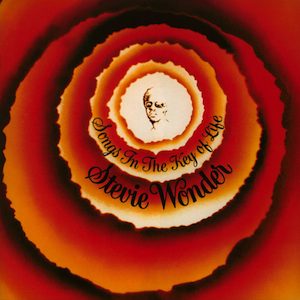
Oh, I sold the young lady "Songs in the Key of Life" and a classic Diana Ross:
I also found a U2 album to play, "How to Dismantle an Atomic Bomb", which is OK.
Not to everyone's taste, I know, but I've always got a soft spot for them.
Monday, 10 June 2013
Untangling the Web
After an afternoon shift at the shop, I popped into town to attend the June meeting of the Untangle the Web meetup group at the Google campus.
The first presentation was by David Little regarding the techniques used in user-centred web design. In particular, he emphasised the research and testing by users.
The second presentation was by Laura Kalbag and was about web design theory:
Actually, it was mostly about typography, a subject close to my heart, and was really informative. I'd never really thought too much about the differences within the different types (serif/sans/script) before, but Laura demonstrated her points very well, in particular that font cannot be separated from page content and that Lorem Ipsum is best not used at all for this reason.
Sunday, 9 June 2013
Hanna
This is available through LoveFilm Instant, although I have seen it in the shop. Hanna has been brought up by her father, an ex-CIA agent, in the wilds of Finland to exact revenge for her mother's death.
Not a bad film, if a little creepy for some vague reason. I think this may be because the title role is played by Saoirse Ronan (who played the younger Briony in Atonement) as a kind of lethal innocent. It's got a good supporting cast, with Cate Blanchett as her nemesis and and Eric Bana as her father. I just kept getting the feeling that Social Services ought be have been involved at some point.
PGP, etc.
Thanks to revelations about the American National Security Agency (their GCHQ) and assurances from William Hague (about our GCHQ), there seems to be a lot of paranoia going around.
If you want to secure your emails, there's a system called PGP, Pretty Good Privacy. It's an encryption system that's been aroung for the last fifteen years or so, but it's still fairly solid and has gone through numerous upgrades. It's available in open source form from GNU Privacy Guard.
I've created a public key and placed it at the bottom of the blog if you want to use it to secure any emails to me.
Saturday, 8 June 2013
The Harder They Come
After listening to the title track in the shop the other day, I thought I'd get the original film through my LoveFilm subscription.
Ivan Martin (Jimmy Cliff) comes to Kingston from the countryside to try and make his fortune singing, but ends up being exploited by a corrupt society and turns to crime.
It's an incredibly difficult film to follow without sub-titles, but that does give it an authentic feel. It's based on a true story.
Thursday, 6 June 2013
MagLev in Japan - The 300mph Train!
Yup, them there Japanese have got themselves a 300mph train and have used MagLev to do it:
That's London to Manchester in about 40 minutes. Yumm!!
Wednesday, 5 June 2013
Super 8
A rather nice little film, courtesy of my LoveFilm subscription, written and directed by J.J. Abrams. Five kids in the 1980's try to make their own horror film (thus the title), but end up in a horror film of their own.
Obviously an homage to his own adolescence, this is a really good pizza movie, with nice nostalgic touches. Very recommended.
Tuesday, 4 June 2013
Star Trek: Into Darkness
Taking advantage of Cheap Tuesday at Empire, I went to see the latest Star Trek. All together now: Kkhhhhhaaaaaaaaaaaaaaaaaaaaaaaaaaaannnnnnnnnnnnn!!!
Yup, the second movie in the reboot has lots of knowing nods to the second Star Trek movie, it's tongue firmly in cheek. Cumberbatch is just right as Kirks' adversary, not too over the top. Shame the Klingons didn't get much of a look in, though. I thoughly enjoyed it and it looked good in 3D, the special effects being utilised to the max. Firmly recommended.
Oxfam Monday - Paintballing in Black and White
Yesterday, I did a morning shift on the bottom deck as June was having a long weekend. Uneventful, although I met Hugh, our arts expert, who I hadn't seen in a while.
I did get some new Lego from W.H. Smiths:
Reminds me of this:
It seemed to be permanently on the jukebox at Liverpool Uni. Student Union during the 1980's.
I did get some new Lego from W.H. Smiths:
Reminds me of this:
It seemed to be permanently on the jukebox at Liverpool Uni. Student Union during the 1980's.
Sunday, 2 June 2013
Africar
No, not a misspelling.
I'm a member of the Institution of Engineering and Technology (IET) and, as part of the membership, I get the E&T magazine. This months issue is a special on technology in Africa and one of the articles concerns the Africar, a concerted effort in the 1980's to build a car suitable for Africa's road system.
The article, by Nick Smith, is an interview with it's original designer Tony Howarth. Calling him "a bit of a character" is an understatement, but the idea and implementation cries out to taken up by serious money.
Saturday, 1 June 2013
Atonement
As part of my LoveFilm subscription, this has been gathering dust for the best part of a year, so I finally got round to watching it. An adaption of the book by Ian McEwan, it's a fiction story about a fiction story; about authors and their works; about an act of childish, jealous cruelty and it's consequences.
I can't say I really warm to it. It's well acted, the casting of the protagonist Briony Tallis is very good, and the set pieces of the Dunkirk beaches very evocative but, like a lot of adaptions, the literary devices don't work very well on the screen. Also the leads don't seem to spark passionately as you think they might. It's a film with a hollow center.
Oxdam Friday - The Outward Urge
Down on the bottom deck this morning, and fairly uneventful. I bought a book from one of John's stock that I had a long time ago, but has since disappeared. This isn't the original Penguin cover, nor the one I had from 1980, but from 1973:
It's about the Troon family, space explorers in the 21st and 22nd centuries.
| 1962 | 1970 | 1980 |
It's about the Troon family, space explorers in the 21st and 22nd centuries.
Thursday - Radical Abundance with Eric Drexler
Yesterday evening I went to a presentation by Eric Drexler, hosted by The London Futurists.
About twenty years ago, I read the first book by Drexler, called "The Engines of Creation", setting the scene for nanotechnology. A lot has happened in the years since then, and I was looking forward to what he had to say.
Unfortunately, he was a little ill-prepared for the presentation and seemed to hedge around the subject, preferring to read from the book he's just written. Fortunately, when the Q&A session came around he was asked specific questions and was a little more forthcoming. Even so, it was disappointing.
Wednesday, 29 May 2013
Tuesday - Erlang User Group
A while ago, I started reading a book by Bruce Tate called "Seven Languages in Seven Weeks", covering some fairly esoteric computer programming languages like Haskell and Io.
One of these was Erlang and it's about as far removed from mainstream languages as you can get. It was designed by Ericsson, the Swedish telecoms company, solely for their needs at the time, about twenty years ago. It's designed for raw information processing; taking an information stream, doing something with it, and sending it somewhere else. What's unique is that it does all this at light speed and, which is becoming more important, concurrently.
All this is well and good and sort of stuck in a small niche part of IT were it not for two things: Erlang went open source a few years ago and hardware is starting to support concurrency, which is causing some headaches with conventional languages.
I went a bit further with it, the point at which my head started to hurt, but I signed on with the Erlang User Group and went to one of their meetings yesterday evening. It was hosted by Erlang Solutions and concerned the use of Erlang at EE (or T-Mobile).
The presenter was Chandru Mullaparthi, Head of Service Development at EE, and was a very down-to-earth speaker. He's been using Erlang for about twelve years and went through the system at EE, highlighting the areas of interest, in particular the anti-fraud features (without giving away anything proprietary). Erlang has allowed him and his team to react very quickly (less than a few days) to any new threats that happen on the EE network, giving them quite a good competitive advantage.
Erlang still looks very niche and so different from conventional languages as to be difficult to justify learning (much less teaching) for the average programmer, but I can imagine it's use spreading, perhaps through the use of Elixir.
Subscribe to:
Posts (Atom)


.jpg)